Alcohol Intolerance Symptoms: Every Sign to Know (and What's Causing Them)

- Is it alcohol intolerance?
- Symptoms during or after drinking
- Symptoms the next day
- Why each symptom happens
- When to see a doctor
- Can symptoms get worse over time?
- What to do next
Share this article
Copy and paste this link
Up to 36% of East Asian populations carry a genetic enzyme variant that makes alcohol actively toxic to their bodies — and most of them can name only one or two of the symptoms it causes. The full list runs much longer.
Alcohol intolerance symptoms span at least eight distinct physical reactions, from facial flushing and rapid heartbeat to hives, breathing difficulty, and amplified next-day hangovers. Each one traces back to the same metabolic bottleneck: a buildup of acetaldehyde, a toxic byproduct the body can't clear fast enough.
This is the complete breakdown — every symptom, what causes it, and when it crosses the line from uncomfortable to medically urgent.
How to Know If What You're Feeling Is Alcohol Intolerance
Alcohol intolerance is a condition where your body can't break down alcohol efficiently, usually because of a genetic difference in the enzymes responsible for alcohol metabolism. It's not an allergy. It's not "being a lightweight." It's a real, measurable metabolic difference that affects how your body handles acetaldehyde, the toxic byproduct your liver produces when it processes ethanol.
According to Mayo Clinic, alcohol intolerance causes immediate, uncomfortable physical reactions after drinking, often from the very first sip.
You may have alcohol intolerance if you notice two or more of the following after drinking:
- Your face, neck, or chest flushes red, even after a small amount
- Your nose gets stuffy or starts running
- Your heart rate noticeably increases
- You develop a headache early in the night, not the next morning
- You feel nauseous before you've had enough to feel "drunk"
- Your skin breaks out in hives, blotches, or feels itchy
If these symptoms show up reliably, across different types of drinks, in different settings, that's the pattern of intolerance.
These aren’t rare reactions, either. In our survey of more than 9,000 people who flush, facial redness was near-universal (98%), while headaches affected half; trouble breathing (38%), nausea (32%) and itchy skin (30%) followed close behind — a reminder that the flush is rarely just a red face.
Symptoms That Happen During or Right After Drinking
This is where most people's experience starts. You take a drink, and within minutes, your body starts sending signals. Here's what each one means.
Facial Flushing and Redness
This is the hallmark symptom, the one that earns alcohol intolerance its other name, the alcohol flush reaction. Your face turns red, sometimes extending down your neck and chest, often within minutes of your first sip.
When your body can't clear acetaldehyde fast enough, the buildup triggers vasodilation: your blood vessels widen, increasing blood flow to the skin's surface. NIAAA notes that this flush reaction is strongly associated with a variant in the ALDH2 gene that reduces the enzyme's ability to break down acetaldehyde.
Stuffy or Runny Nose
A blocked nose after drinking is one of the most under-recognized intolerance symptoms. Acetaldehyde buildup triggers histamine release, which causes nasal tissue to swell. Alcohol itself is also a vasodilator, meaning the blood vessels inside your nasal passages expand and restrict airflow.
If you frequently get a stuffy nose after drinking, alcohol intolerance is one of the most common explanations.
Rapid Heartbeat (Tachycardia)
If your heart starts pounding after one drink, not five, one, that's a classic intolerance signal. Excess acetaldehyde stimulates the release of catecholamines (like adrenaline), which directly increases your heart rate. It can also cause a slight blood pressure drop, making your heart compensate by beating faster.
Headache
People with alcohol intolerance often get headaches after drinking a small amount, sometimes within the first hour, not the next morning. Acetaldehyde promotes inflammation and triggers histamine release, which dilates blood vessels in the brain, creating that throbbing, pressure-like pain.
Nausea and Stomach Discomfort
Feeling queasy after a single drink is one of the most frustrating symptoms. Acetaldehyde is toxic to the gastrointestinal lining and can irritate the stomach directly. The histamine response compounds this by affecting gut motility and increasing stomach acid production.
If you regularly experience nausea after just one drink, alcohol intolerance is a strong possibility.
Hot Flashes and Sweating
Feeling flushed, sweaty, and overheated ties back to the same vasodilation that causes facial redness. When blood vessels dilate near the skin, your body loses heat faster and triggers sweating as a thermoregulation response. Acetaldehyde also disrupts normal temperature regulation in the hypothalamus, which is why you feel a wave of heat that has nothing to do with how warm the room is.
Skin Reactions (Hives, Itching, Rash)
Some people develop hives (raised, itchy welts), a blotchy rash, or generalized itching after drinking. This is driven by mast cell activation: acetaldehyde and histamine together trigger mast cells in the skin to release even more histamine, creating a feedback loop of inflammation.
If skin reactions happen with every type of drink, intolerance is likely. If they only happen with wine or beer, an ingredient sensitivity (sulphites, tannins, grains) may be the culprit.
Difficulty Breathing (in Severe Cases)
Wheezing, chest tightness, or shortness of breath after drinking is less common but more serious. Histamine release can cause bronchospasm, a tightening of the airways, especially in people who already have asthma.
If you experience difficulty breathing when drinking, that's a symptom that warrants medical attention.
Symptoms That Show Up the Next Day
Many people with alcohol intolerance wake up feeling far worse than their intake would justify and assume it's "just a bad hangover."
The difference: a standard hangover is mostly about dehydration and sleep disruption from the amount of alcohol consumed. With intolerance, next-day symptoms are amplified because acetaldehyde wasn't fully cleared overnight. Your ALDH2 enzyme works slowly, so the toxic byproduct lingers hours longer than it should.
Common next-day symptoms include:
- Lingering headache and brain fog, driven by residual acetaldehyde and the inflammatory cytokines it triggers
- Persistent nausea, from continued GI irritation and increased gut permeability
- Extreme fatigue, from disrupted sleep and liver glycogen depletion
- Hangover anxiety, acetaldehyde metabolism is associated with cortisol spikes that leave your nervous system in a heightened state
- Prolonged redness or skin blotchiness, histamine continues circulating long after the last drink
If your "hangover" consistently feels disproportionate to what you drank, the problem may not be how much. It may be how your body processes it.
Why Each Symptom Happens: The Science in Plain English
Nearly every symptom above traces back to one of two root mechanisms.
The Enzyme Pathway Behind Every Symptom
Every symptom in the list above traces back to this single bottleneck — acetaldehyde that your body cannot clear quickly enough.
Mechanism 1: Acetaldehyde buildup (the ALDH2 pathway)
Your liver converts ethanol into acetaldehyde using alcohol dehydrogenase (ADH). A second enzyme, aldehyde dehydrogenase 2 (ALDH2), then breaks acetaldehyde into harmless acetate. In people with ALDH2 deficiency, a genetic variant (the ALDH2*2 allele) produces a version of that enzyme that barely works. Acetaldehyde accumulates instead of being cleared, directly causing flushing, rapid heartbeat, nausea, and headaches. NIAAA estimates up to 36% of East Asian populations carry this variant, though it can appear in any ethnic background.
Mechanism 2: Histamine and sulphite reactions
Symptoms like nasal congestion, hives, and breathing difficulty are driven more by histamine. Alcohol contains histamine (especially fermented drinks), and acetaldehyde buildup triggers your body to release even more. If your enzymes for clearing histamine (diamine oxidase and histamine N-methyltransferase) are also less efficient, the effect is compounded. Sulphites, preservatives in wine, can trigger respiratory symptoms in sensitive individuals, which is why some people react strongly to wine but tolerate spirits.
In many people, both mechanisms are at play, which is why the symptom list can feel so broad.
| Symptom | Primary Cause | Mechanism |
|---|---|---|
| Facial flushing | Acetaldehyde buildup (ALDH2 deficiency) | Acetaldehyde triggers vasodilation — blood vessels near the skin widen, increasing surface blood flow and causing visible redness |
| Stuffy or runny nose | Histamine release + alcohol vasodilation | Acetaldehyde buildup triggers histamine release, causing nasal tissue to swell; alcohol's vasodilatory effect also expands blood vessels inside nasal passages, restricting airflow |
| Rapid heartbeat (tachycardia) | Acetaldehyde buildup (ALDH2 deficiency) | Excess acetaldehyde stimulates release of catecholamines (including adrenaline), directly increasing heart rate; a slight blood pressure drop compounds the effect |
| Headache | Acetaldehyde + histamine | Acetaldehyde promotes inflammation and triggers histamine release, which dilates blood vessels in the brain, creating throbbing, pressure-like pain — often within the first hour |
| Nausea and stomach discomfort | Acetaldehyde + histamine | Acetaldehyde is toxic to the GI lining and irritates the stomach directly; histamine response disrupts gut motility and increases stomach acid production |
| Hot flashes and sweating | Acetaldehyde buildup (ALDH2 deficiency) | Vasodilation near the skin accelerates heat loss and triggers sweating as a thermoregulatory response; acetaldehyde also disrupts normal temperature regulation in the hypothalamus |
| Hives, itching, or rash | Histamine / mast cell activation | Acetaldehyde and histamine together trigger mast cells in the skin to release additional histamine, creating a feedback loop of inflammation and raised, itchy welts |
| Difficulty breathing | Histamine / sulphites | Histamine release can cause bronchospasm (airway tightening), especially in people with asthma; sulphite preservatives in wine can independently trigger respiratory symptoms in sensitive individuals |
If your symptoms match the ALDH2 pattern, flushing, rapid heartbeat, nausea that starts with the first drink, Sunset is formulated specifically to support acetaldehyde clearance. See how it works.
Symptoms That Could Signal Something More Serious
Most alcohol intolerance symptoms are uncomfortable but not dangerous. However, there are reactions that cross a line.
Alcohol intolerance is not the same as an alcohol allergy. A true allergy involves an IgE-mediated immune response and can escalate to anaphylaxis, a life-threatening reaction requiring emergency treatment.
| Feature | Standard Hangover | Alcohol Intolerance | Alcohol Allergy (IgE-mediated) |
|---|---|---|---|
| Onset timing | Hours after drinking; peaks the next morning | Within minutes of the first sip; symptoms begin during drinking | Within minutes to an hour; rapid and escalating |
| Amount required | Proportional to intake; requires moderate to heavy consumption | Triggered by small amounts; can occur after a single drink | Can be triggered by a tiny amount; threshold may be very low |
| Key symptoms | Headache, fatigue, nausea, brain fog, dehydration | Facial flushing, rapid heartbeat, stuffy nose, nausea, headache, hives, hot flashes | Hives, throat or lip swelling (angioedema), breathing difficulty, rapid weak pulse, dizziness or fainting |
| Mechanism | Dehydration, sleep disruption, and acetaldehyde from large alcohol load | Genetic ALDH2 enzyme deficiency causes acetaldehyde to accumulate; histamine pathway also contributes | IgE-mediated immune response — immune system treats alcohol or a drink ingredient as a foreign invader |
| Severity risk | Low — uncomfortable but self-limiting; resolves with rest and hydration | Moderate — symptoms are predictable and manageable; breathing difficulty warrants medical attention | High — can escalate to anaphylaxis, a life-threatening emergency requiring immediate treatment |
| What to do | Rest, hydrate, eat; symptoms resolve within 24 hours | Identify your pattern (ALDH2 vs. histamine); consider acetaldehyde support supplements; see a doctor if breathing symptoms occur | Call emergency services immediately if throat swelling, breathing difficulty, or rapid weak pulse develops; carry an epinephrine auto-injector if diagnosed |
Seek immediate medical attention if you experience:
- Swelling of the lips, tongue, throat, or face (angioedema)
- Severe difficulty breathing or a feeling of your throat closing
- A rapid, weak pulse with dizziness or fainting
- Widespread hives with rapid progression
Sudden alcohol intolerance can also occasionally signal an underlying condition. Hodgkin's lymphoma can cause pain in lymph nodes after drinking. Carcinoid syndrome can mimic flushing. These are rare, but if symptoms appeared suddenly with other unexplained changes, see your doctor.
Can Alcohol Intolerance Symptoms Get Worse Over Time?
If your intolerance is genetic (you carry the ALDH2*2 variant), the underlying cause is stable, you were born with it. But many people report reactions feeling worse with age, likely because the body's resilience to acetaldehyde declines: liver function shifts, recovery capacity decreases, and tolerance for inflammation drops.
There are also acquired forms that develop later in life:
- Hormonal shifts — some women develop new sensitivity during menopause, related to how oestrogen interacts with alcohol metabolism
- Post-viral changes — people have reported new intolerance after COVID-19, potentially from autonomic nervous system disruption
- Medication changes — certain antibiotics and antifungals can interfere with alcohol metabolism
Genetic intolerance doesn't "go away," but it can feel different over time. And if intolerance appears suddenly, that's worth investigating with a doctor.
What to Do If You Recognise These Symptoms
1. Figure out your type. Is it the ALDH2 pattern (flushing, racing heart, nausea from the first sip)? Or a histamine/ingredient pattern (stuffy nose with wine, hives with beer, spirits are fine)? Tracking symptoms across drink types for a few weeks is the single most useful thing you can do.
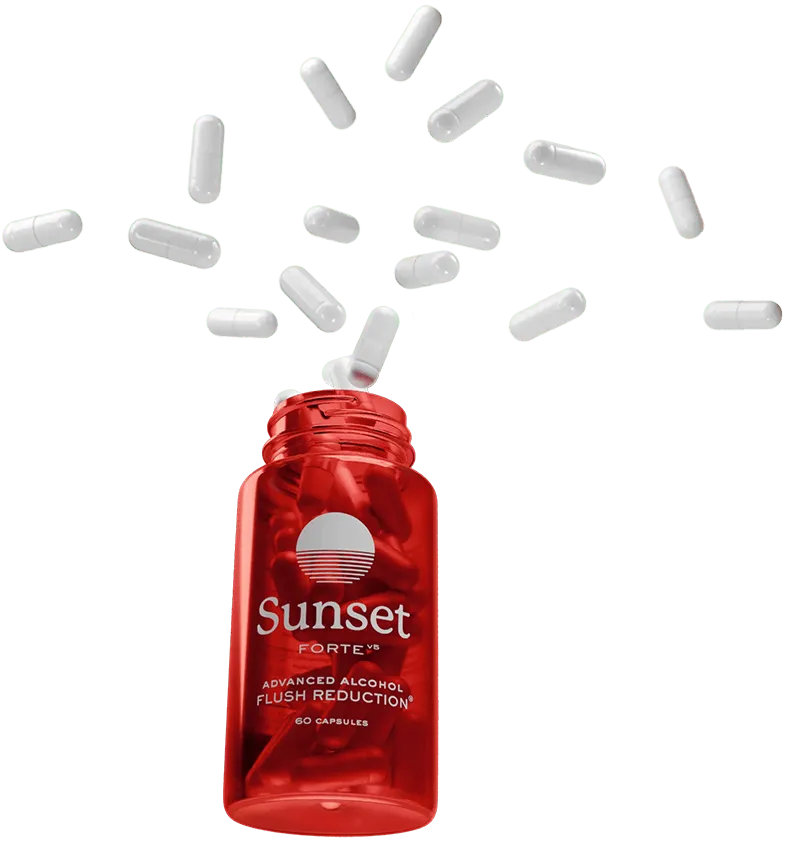
2. If it's the ALDH2 pattern, support your metabolism. Sunset Alcohol Flush Support is designed for this: its combination of DHM (dihydromyricetin), NAC (N-acetyl cysteine), picrorhiza kurroa, and B vitamins supports the acetaldehyde breakdown pathway where ALDH2 falls short.
3. If symptoms are severe, see a doctor. Breathing difficulty, throat swelling, or fainting is not something to manage at home. A medical workup can rule out underlying conditions and medication interactions.
Not sure which type of intolerance you have? Take the alcohol intolerance self-test to see which pattern your symptoms match and what to do about it.
Enjoy your social life again — get Sunset Alcohol Flush Support for
33% off while stocks last!
What's inside?
Sunset Forte uses a carefully formulated blend of Glutathione, Dihydromyricetin, Cysteine, L-Theanine, & B Vitamins to support natural acetaldehyde processing and a clearer, less-flushed look.
Learn more
94% of people who try Sunset are satisfied.