

For years, alcohol caused no problems. A beer at dinner, a glass of wine at a party — nothing worth thinking about. Then, without warning, the same drink that was fine last month now triggers flushing, nausea, and a pounding heart. The question hits hard: is it really possible to develop alcohol intolerance out of nowhere?
It is. Alcohol intolerance — a physical inability to process alcohol efficiently — can surface later in life even in someone who drank without issues for decades. According to the Mayo Clinic, the condition is often rooted in a genetic inability to break down alcohol properly, but genetics are only part of the picture. Viral illness, medications, hormonal shifts, and plain aging can all flip the switch.
The before-and-after pattern is remarkably consistent. A person who never gave alcohol a second thought begins experiencing facial redness, headaches, or gut distress after just one drink. Sometimes the change is gradual; sometimes it appears overnight. In either case, two broad explanations account for most of it: a lifelong genetic predisposition (most commonly ALDH2 deficiency) that only became noticeable once the body's compensating mechanisms wore thin, or an acquired change — a new medication, a post-viral syndrome, or declining liver function — that altered alcohol metabolism directly.
One important distinction before going further: alcohol intolerance is the opposite of alcohol tolerance. Intolerance means the body reacts badly to alcohol. Tolerance means more alcohol is needed to feel the same effect. They are completely different mechanisms, and confusing them is one of the most common mistakes people make. (This is broken down later in the article.)
For a broader overview, the alcohol intolerance complete guide covers the fundamentals. What follows here is a detailed look at every known reason a person can develop alcohol intolerance — and what can be done about it.
The genetic cause: you may have had it all along
Here's something most articles on this topic completely miss: many people who think they've developed alcohol intolerance didn't develop anything new. They've always had it. It just wasn't obvious.
The most common genetic culprit is a variant of the ALDH2 gene, specifically the ALDH2*2 allele (SNP rs671). This variant impairs your body's ability to break down acetaldehyde, the toxic intermediate compound produced every time you drink. When acetaldehyde builds up, it causes facial flushing, rapid heartbeat, nausea, headaches after a small amount of alcohol, and nasal congestion.
An estimated 540 million people worldwide carry at least one copy of this variant, with the highest prevalence (30–40%) among people of East Asian descent. If you're a heterozygous carrier (one normal copy, one mutant copy), your ALDH2 enzyme activity drops to roughly 17–25% of normal. That's low enough to cause symptoms, but in your twenties, with a healthy liver and moderate drinking habits, you might barely notice.
So what changes? As you age, your liver's baseline efficiency declines. NAD+, a cofactor needed for acetaldehyde processing, naturally decreases. If your drinking frequency or volume increases, you're producing more acetaldehyde than your compromised enzyme can handle. Even weight changes can alter how alcohol distributes through your system.
The result: symptoms that were once mild or absent become impossible to ignore. You didn't develop a new problem. The problem was always there, and your body just ran out of room to compensate.
If you're curious whether this applies to you, a 23andMe test or similar genetic panel can identify the rs671 variant directly.
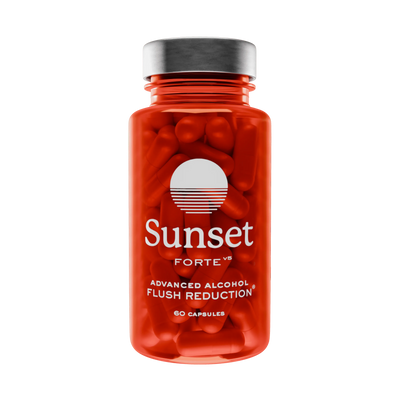
If your symptoms sound like ALDH2 deficiency, facial flushing, rapid heartbeat, stuffy nose after one or two drinks, Sunset is designed to support your body's acetaldehyde clearance. Learn how Sunset works →
Acquired cause 1: long COVID and viral illness
If your sudden alcohol intolerance appeared after a bout of COVID-19, you're far from alone. "I can't drink anymore since I had COVID" became one of the most common complaints in long COVID communities, and the science has caught up with what patients were reporting.
Several mechanisms are at play. Long COVID can trigger autonomic dysfunction, including POTS (postural orthostatic tachycardia syndrome), which makes the cardiovascular effects of alcohol, like dizziness, rapid heart rate, and faintness, dramatically worse. Even a single drink can send your heart rate soaring if your autonomic nervous system is dysregulated.
Then there's the histamine angle. Research on post-COVID immune dysregulation has linked long COVID to mast cell activation syndrome (MCAS), where mast cells release excessive histamine in response to triggers, including alcohol. This causes flushing, headaches, GI distress, and skin reactions that look a lot like classic alcohol intolerance.
COVID-19 also disrupts the gut microbiome, potentially reducing your body's production of diamine oxidase (DAO), the enzyme that breaks down histamine in your gut. With less DAO, the histamine in alcoholic drinks (especially wine and beer) hits harder than it used to.
Other viral infections have been linked to similar changes. EBV (Epstein-Barr virus), glandular fever, and severe flu have long been associated with post-viral shifts in alcohol sensitivity. COVID just put a spotlight on something infectious disease specialists had already observed.
The good news: for many people, post-viral alcohol intolerance improves over time as the body heals.
Acquired cause 2: menopause and hormonal changes
If you're a woman in your 40s or 50s who suddenly can't tolerate wine the way you used to, menopause is very likely playing a role, and it's a cause that rarely gets the attention it deserves.
The connection runs through oestrogen, histamine, and the DAO enzyme. Here's how.
Oestrogen and histamine exist in a bidirectional feedback loop: oestrogen stimulates mast cells to release histamine, and histamine stimulates the ovaries to produce oestrogen. During your reproductive years, this stays in balance. But during perimenopause and menopause, oestrogen drops sharply, and with it, your body's production of DAO.
As Maintz and Novak documented in their landmark review on histamine intolerance, DAO is the primary enzyme for metabolizing ingested histamine, and its activity is influenced by hormonal status. Progesterone, which also declines during menopause, is another known stimulant of DAO production. When both hormones fall, DAO activity drops, and suddenly the histamine in that glass of red wine overwhelms a system that used to handle it comfortably.
This explains why so many women report that alcohol intolerance arrives alongside other menopause symptoms like hot flashes, sleep disruption, and brain fog. The hot flashes are particularly confusing because they can look almost identical to alcohol flush reaction, making it hard to tell which is which (or whether it's both at once).
Hormone replacement therapy (HRT) may help some women recover their previous tolerance by restoring oestrogen and progesterone levels, though results vary widely. Age-related liver enzyme changes compound the issue, meaning the hormonal shift is rarely the only factor.
Acquired cause 3: medications and supplements
Sometimes the culprit isn't your body at all. It's your medicine cabinet.
A surprisingly large number of common medications can cause disulfiram-like reactions when combined with alcohol. The most well-known offenders include metronidazole (Flagyl), certain cephalosporin antibiotics, and tinidazole. These drugs inhibit aldehyde dehydrogenase, the same enzyme that's genetically impaired in ALDH2 deficiency, creating a temporary, drug-induced version of alcohol intolerance with flushing, nausea, vomiting, and rapid heartbeat.
Beyond the disulfiram-like group, other medications can worsen alcohol sensitivity through different pathways:
- NSAIDs (ibuprofen, aspirin) can inhibit DAO activity and promote histamine release, amplifying reactions to histamine-containing drinks.
- Certain antidepressants, particularly amitriptyline and MAOIs, interfere with histamine metabolism.
- Metformin can affect how the liver processes alcohol, leading to increased GI side effects.
- Proton pump inhibitors (PPIs) alter the gut microbiome in ways that may increase histamine-producing bacteria.
- Some blood pressure medications amplify alcohol's vasodilatory effects, intensifying flushing and dizziness.
If your alcohol intolerance appeared around the same time you started a new medication, that's a strong clue. Talk to your doctor before making any changes to your prescriptions, but don't ignore the timing.
Acquired cause 4: aging, liver changes, and reduced enzyme activity
Even without a genetic variant or a new medication, your body simply gets worse at processing alcohol as you age. This affects everyone to some degree.
Several factors stack up. Hepatic blood flow declines with age, meaning alcohol takes longer to be processed by liver enzymes. The liver's mitochondrial function also decreases, reducing ALDH2 enzyme efficiency even in people with fully functional genes. Your body's stores of NAD+, the cofactor required for both major steps of alcohol metabolism, naturally deplete over the decades.
Body composition matters too. As you age, lean muscle mass decreases and body fat increases. Since alcohol distributes primarily through water (which muscle holds more of than fat), the same drink produces a higher blood alcohol concentration in an older body.
Add in years of cumulative oxidative stress and a decline in first-pass metabolism, and the two beers you handled at 25 can feel like four at 55. This type of change is gradual and universal. It's not a disease. It's just aging.
Alcohol intolerance vs. alcohol tolerance: don't confuse them
These two terms sound like they should be related. They're actually opposites.
| Feature | Alcohol Intolerance | Alcohol Tolerance |
|---|---|---|
| What it is | A metabolic failure — the body cannot break down alcohol or its byproducts efficiently | A neurological adaptation — the brain adjusts so more alcohol is needed to feel the same effect |
| Where it happens | Liver, gut, and immune system | Brain (GABA-A receptors) |
| Mechanism | Impaired ALDH2 enzyme activity causes acetaldehyde to accumulate; histamine or immune pathways may also be involved | Repeated alcohol exposure downregulates GABA-A receptor sensitivity, requiring higher doses for the same sedative effect |
| Key symptom | Flushing, nausea, rapid heartbeat, headaches — symptoms appear quickly after small amounts | Need more alcohol to feel the same effect; less obvious impairment at a given dose |
| What it signals | Body cannot process alcohol properly (genetic, viral, hormonal, or age-related cause) | A warning sign for alcohol use disorder (AUD); associated with heavy, regular drinking |
| Is it dangerous? | Yes — chronic acetaldehyde exposure is a carcinogen; ALDH2 carriers face elevated cancer risk if they continue drinking | Yes — masks intoxication cues, driving higher consumption and increasing long-term health risks |
Alcohol tolerance is a neurological adaptation. When you drink regularly, your brain adjusts its GABA-A receptors so you need more alcohol to feel the same effect. Tolerance is a hallmark of heavy drinking and a warning sign for alcohol use disorder (AUD). It happens in your brain.
Alcohol intolerance is a metabolic failure. Your body can't break down alcohol or its byproducts efficiently, causing physical symptoms like flushing, nausea, headaches, and rapid heartbeat. It happens in your liver, gut, and immune system.
Here's where it gets tricky for people with ALDH2 deficiency: some carriers develop what looks like tolerance to their flush over years of drinking. The visible redness fades, and they assume the problem is gone. But acetaldehyde exposure hasn't changed. The body has simply stopped producing the surface-level warning signals. This pseudo-tolerance is actually more dangerous because it removes the caution that was protecting you.
The Cleveland Clinic's overview of alcohol intolerance is a solid resource for distinguishing the two. You might also find our breakdown of alcohol allergy vs intolerance helpful for ruling out a true allergic reaction.
Can alcohol intolerance go away?
| Cause | Reversible? | Typical Timeline | Key Action |
|---|---|---|---|
| Genetic / ALDH2 deficiency | No | Permanent | Support acetaldehyde clearance; consider Sunset Alcohol Flush Support |
| Post-viral / long COVID | Often yes | 6–12 months | Focus on gut recovery; reduce histamine-rich foods; reintroduce alcohol slowly |
| Medication-induced | Yes (when drug stops) | Days to weeks | Talk to your doctor — never discontinue a medication without guidance |
| Hormonal / menopause | Partial | Variable | Consider HRT to restore oestrogen / progesterone; assess liver health alongside |
| Age-related decline | No | Progressive | Reduce alcohol intake; support liver health to slow impact |
It depends entirely on what's causing it.
Genetic causes (ALDH2 deficiency) are permanent. There is currently no approved therapy that restores ALDH2 enzyme function. Your DNA isn't changing, so neither is your enzyme activity. However, genetic intolerance is very much manageable, and more on that in the next section.
Post-viral intolerance (including long COVID) often improves over months as autonomic function stabilizes and the gut microbiome recovers. Some people report full resolution within 6–12 months; others find that certain sensitivities linger.
Medication-induced intolerance typically resolves when you stop taking the offending drug, though you should never discontinue a medication without medical guidance.
Hormonal causes may partially improve with HRT or as the body adjusts to its new hormonal baseline post-menopause.
Age-related decline is progressive and won't reverse, but reducing intake and supporting liver health can slow its impact.
One red flag: if your intolerance is accompanied by unexplained weight loss, night sweats, or lymph node swelling, see a doctor promptly. In rare cases, sudden alcohol intolerance, particularly pain after drinking, can be an early symptom of Hodgkin's lymphoma. Uncommon, but worth knowing.
If your intolerance is genetic (ALDH2-related), it won't disappear, but it can be managed. Thousands of people use Sunset to drink more comfortably. See Sunset →
What you can do about it
The right approach depends on identifying your cause, or at least narrowing it down.
Step 1: Figure out the category. Are your symptoms consistent with ALDH2 deficiency (flushing, rapid heartbeat, nasal congestion after small amounts of any alcohol)? Or are they more histamine-related (headaches, GI distress, worse with wine/beer than spirits)? A genetic test for the rs671 SNP through 23andMe can give you a definitive answer on the genetic side.
Step 2: Address the root cause.
- For ALDH2 deficiency: You can't fix the gene, but you can support your body's ability to clear acetaldehyde. Sunset Alcohol Flush Support was built for exactly this, supporting your body's acetaldehyde metabolism pathway. Pair it with moderate intake and slower drinking.
- For histamine-related intolerance: Consider a DAO enzyme supplement before drinking. Choose lower-histamine drinks (clear spirits over red wine or aged beer). Our guide on sulphites in alcohol can help you identify which drinks are most likely to trigger reactions.
- For medication-related intolerance: Talk to your doctor about alternatives or timing adjustments. Don't just power through it.
- For post-viral intolerance: Give your body time. Focus on gut health, reduce histamine-rich foods temporarily, and reintroduce alcohol slowly when you feel ready.
Step 3: Know when to see a doctor. If your intolerance is worsening, if you're experiencing symptoms unrelated to drinking (fatigue, jaundice, abdominal pain), or if you have any red flags mentioned above, get your liver function tested. A basic liver enzyme panel is quick, cheap, and can rule out serious causes.
Regardless of the cause, drinking less is always the most effective intervention. That's not a moral judgment, it's just the clearest path to feeling better.
Not sure if your intolerance is genetic or acquired? Either way, Sunset is a good starting point for anyone whose body struggles with acetaldehyde. Try Sunset →