Hangover anxiety (hangxiety): why you feel anxious after drinking and how to fix it

Share this article
Copy and paste this link
The morning-after dread has a name — hangover anxiety, or hangxiety — and roughly 22% of social drinkers experience it regularly. Racing heart, chest tightness, spiralling shame, a conviction that something is catastrophically wrong even when nothing actually happened. It feels psychological. It isn't.
Not guilt. Not overthinking. Four measurable neurochemical events.
When alcohol leaves the bloodstream, it doesn't simply wear off. It leaves behind a GABA system in deficit, a glutamate system in overdrive, a cortisol spike timed to peak at the exact moment of waking, and a serotonin-dopamine crash that strips the brain's ability to feel reward or safety. Each mechanism is distinct, each is measurable, and each has its own timeline — which is why hangxiety can feel like anxiety, depression, and panic layered on top of each other all at once.
Most explanations stop at "alcohol is a depressant, so the rebound makes you anxious." That covers roughly one-quarter of what's actually happening. Below is the full picture: all four mechanisms, the neuroscience behind each one, and — critically — what to do about them.
The GABA rebound: why your brain goes into overdrive after drinking
This is the biggest piece of the puzzle, so let's start here.
When you drink alcohol, it enhances the activity of GABA (gamma-aminobutyric acid), your brain's primary inhibitory neurotransmitter. GABA is the chemical that calms neural activity down. Alcohol acts as an allosteric modulator on your GABA-A receptors, boosting their signalling. That's why a couple of drinks makes you feel relaxed, social, and less inhibited. Your brain's braking system is working overtime.
But your brain doesn't like being pushed out of balance. While you're still drinking, it's already adapting. It starts downregulating GABA receptors, making them less sensitive, and simultaneously upregulating glutamate, the brain's primary excitatory neurotransmitter, particularly at NMDA receptors. Think of it as your brain turning down the brakes and stepping on the gas to compensate for alcohol's sedating effects.
The problem hits when the alcohol clears your system. The GABA suppression is still in effect. The glutamate upregulation is still in effect. But the artificial GABA boost from alcohol? Gone. What's left is a brain temporarily stuck in a hyperexcitable state, with too much excitation and not enough inhibition. Researchers call this an anxiogenic rebound, and it's the same mechanism (at a subclinical scale) that drives benzodiazepine withdrawal anxiety. Same receptor system, different substance.
Even a single night of moderate drinking can trigger this rebound. You don't need to be a heavy drinker. Three or four drinks on a Friday night can leave your GABA system below baseline for the next 12-24 hours.
The timing matters too. The GABA rebound typically peaks as blood alcohol approaches zero, which for most people is somewhere in the early morning hours. That's why you often wake up at 3 or 4 AM with your heart pounding. Your excitatory neurotransmitters are running unopposed while your inhibitory system plays catch-up.
One more thing: with repeated episodes of heavy drinking, this rebound can intensify through a process called kindling. Each cycle of intoxication and withdrawal leaves the GABA system a little more sensitised, so the anxiety gets worse over time, even if you're drinking the same amounts.
If you also experience flushing or other physical symptoms when you drink, ALDH2 deficiency may mean your acetaldehyde clears even more slowly, compounding the hangxiety effect. Learn how Sunset helps.
Cortisol: how drinking hijacks your stress hormones overnight
While the GABA rebound is creating a hyperexcitable brain, your stress hormone system is doing something equally unhelpful.
The HPA axis (hypothalamic-pituitary-adrenal axis) is your body's central stress response system. Here's the chain: your hypothalamus releases CRH (corticotropin-releasing hormone), which tells your pituitary gland to release ACTH (adrenocorticotropic hormone), which tells your adrenal glands to pump out cortisol. Cortisol is the hormone that puts you in fight-or-flight mode: elevated heart rate, heightened threat perception, that distinctive feeling of dread.
Alcohol initially suppresses the HPA axis. In the first few hours of a drinking session, cortisol output actually decreases. You feel chill. Relaxed. Unbothered.
But just like GABA, the HPA axis rebounds. Research shows that alcohol activates the HPA axis, and the strength of the response depends on dose, genetics, and sex. During the second half of the night, while you're sleeping (poorly), cortisol levels spike well above their normal baseline. The cortisol awakening response, already the highest cortisol peak of the day, becomes exaggerated. CRH release also increases in brain regions tied to emotional processing, including the amygdala, the structure responsible for threat appraisal and fear responses.
So when you open your eyes the morning after drinking, your amygdala is being bathed in cortisol and CRH at levels that would normally be reserved for an actual threat. No wonder everything feels catastrophic.
Alcohol also wrecks your sleep architecture. It suppresses REM sleep in the first half of the night and causes fragmented, shallow sleep in the second half. This matters because sleep deprivation by itself elevates cortisol and increases amygdala reactivity. You're getting a double hit: the cortisol rebound from alcohol plus the cortisol elevation from terrible sleep. Your sympathetic nervous system ends up fully activated before you've even gotten out of bed.
This is also why hangxiety is almost always worst in the morning and tends to soften as the day goes on. Your cortisol levels are gradually returning to baseline, and your nervous system is climbing down from its artificially elevated state.
Acetaldehyde's role in hangxiety: the mood-disrupting metabolite
Here's where things get interesting, and where most hangxiety articles stop short.
Every time you drink, your liver converts ethanol into acetaldehyde, a toxic intermediate metabolite that's eventually broken down into harmless acetate by an enzyme called ALDH2. In most people, this process happens quickly. But acetaldehyde doesn't just sit in your liver waiting to be cleared. It enters your bloodstream and can cross the blood-brain barrier.
Once in the brain, acetaldehyde does something that directly impacts your mood: it reacts with neurotransmitters. Specifically, acetaldehyde undergoes condensation reactions with dopamine to form compounds called tetrahydroisoquinolines (TIQs), the most studied of which is salsolinol. It also reacts with serotonin precursors to form beta-carbolines. These condensation products are themselves psychoactive: they interact with dopamine receptors, opioid receptors, and serotonergic pathways, and research has linked them to disrupted mood regulation and altered dopamine metabolism.
In practical terms, acetaldehyde is chemically interfering with the very neurotransmitter systems that regulate your emotional state. Your GABA is rebounding, your cortisol is spiking, and on top of all that, a toxic metabolite is actively disrupting your dopamine and serotonin machinery.
This becomes especially relevant for people with ALDH2 deficiency, a genetic variant carried by roughly 540 million people worldwide, most commonly of East Asian descent. If your ALDH2 enzyme is impaired, acetaldehyde clears more slowly, meaning the brain is exposed to higher concentrations for longer periods. The condensation product formation increases, the oxidative stress worsens, and the neuroinflammatory cascade escalates. If you've ever wondered why some people seem to get hit with disproportionately brutal hangxiety compared to their friends, genetics, specifically acetaldehyde and how your body processes it, is a major piece of the answer.
To understand more about how this connects to emotional wellbeing, read about how Asian flush connects to anxiety and depression.
Serotonin and dopamine depletion: the next-day crash
The fourth mechanism is the simplest to understand, but it piles on top of everything else.
Alcohol acutely boosts dopamine release in the mesolimbic reward pathway, specifically the nucleus accumbens. That's the euphoria, the warmth, the sense that everyone in this bar is your best friend. It also temporarily increases serotonin activity, contributing to the elevated mood and social confidence.
But what goes up comes down. After sustained drinking, both dopamine and serotonin systems end up below their normal baseline levels. Dopamine production slows. Serotonin reuptake increases. The reward system that was running hot 12 hours ago is now running cold.
The result is a specific emotional signature that's different from pure anxiety: anhedonia (nothing feels rewarding or interesting), flat affect, low motivation, and a pervasive sense of "what's the point." It's the dread of hangxiety combined with the emotional flatness of mild depression. For people who already live with pre-existing anxiety or depression, this depletion can feel much worse, because their baseline neurotransmitter levels are already lower and the post-alcohol crash drops them further into uncomfortable territory.
This is also why the "hair of the dog" strategy feels so tempting. Another drink would temporarily raise dopamine and serotonin again, providing relief. But it restarts the entire cycle: GABA rebound, cortisol spike, acetaldehyde exposure, neurotransmitter depletion. The next crash is usually worse.
How long does hangover anxiety last?
For most people, hangxiety follows a predictable timeline.
It typically peaks in the early morning hours and first thing upon waking, when the GABA rebound is strongest, cortisol is at its highest, and blood alcohol is near zero. Over the next 12-24 hours, your GABA receptors gradually normalise, cortisol returns to baseline, and your serotonin and dopamine systems begin to recover. By the evening after a night of moderate drinking, most people feel noticeably better.
But there's a lot of individual variation. How long hangxiety lasts depends on how much you drank (there's a clear dose-response relationship), your body weight and sex, your genetic makeup (including ALDH2 status), whether you ate before drinking, and whether you have pre-existing anxiety.
For heavier drinking sessions, hangxiety can extend to 48-72 hours. The GABA system takes longer to rebalance after larger disruptions, and cortisol can remain elevated for days after a binge. If you're someone who notices hangxiety getting worse over the years even though your drinking hasn't changed, the kindling effect mentioned earlier is likely responsible, and it's a sign worth paying attention to.
For a related look at symptom timelines, check out how long alcohol symptoms typically last.
How to treat hangover anxiety: what actually works
Now that you understand the four mechanisms behind hangxiety, the treatment strategies start to make more sense. Here's what actually helps, in order of effectiveness.
Give it time. This sounds frustrating, but it's the most reliable "treatment." Your GABA receptors will resensitise. Your cortisol will come back down. Your neurotransmitters will rebalance. For a moderate drinking session, you're looking at 12-24 hours of discomfort, and every hour you feel a little more normal.
Hydrate with electrolytes. Dehydration worsens anxiety symptoms by increasing heart rate and reducing blood volume, both of which mimic and amplify the physical sensations of a panic attack. Water is good. Water with sodium, potassium, and magnesium is better. Skip the sugary sports drinks and grab something with a balanced electrolyte profile.
Eat something substantial. Low blood sugar is anxiogenic on its own, and alcohol depletes your glycogen stores overnight. A meal with protein, complex carbs, and some fat will stabilise your blood sugar and provide the amino acid building blocks your brain needs to rebuild neurotransmitter levels. B vitamins, particularly B1 (thiamine), B6, and B12, are depleted by alcohol metabolism and are involved in both GABA synthesis and serotonin production, so foods rich in these (eggs, whole grains, leafy greens) are especially helpful.
Move your body gently. Light exercise, a walk, some stretching, easy yoga, helps metabolise excess cortisol and stimulates endorphin release. Don't push hard. A brutal gym session when your nervous system is already in overdrive will make things worse. Think of movement as cortisol disposal, not a workout.
Prioritise sleep. If hangxiety has you wired and awake, try to create conditions for rest even if you can't fully fall asleep. Dim lights, cool room, no screens. Your brain does its most important neurotransmitter restoration during sleep, and even partial sleep debt repayment helps.
Use grounding techniques for acute symptoms. If your hangxiety is tipping into panic territory, with racing heart, shortness of breath, and spiralling thoughts, basic grounding exercises can interrupt the cycle. The 5-4-3-2-1 technique (name five things you see, four you hear, three you can touch, two you smell, one you taste) works by redirecting your prefrontal cortex away from the amygdala-driven threat loop.
Reduce the acetaldehyde burden before it accumulates. This is the proactive approach. Since acetaldehyde directly disrupts neurotransmitter function and contributes to neuroinflammation, reducing how much of it builds up in the first place means less next-day neurochemical disruption. Eating before you drink, pacing your intake, and staying hydrated all reduce peak acetaldehyde levels. For additional support, ingredients like dihydromyricetin (DHM) and NAC (N-acetyl cysteine) have been studied for their roles in supporting acetaldehyde metabolism.
What to avoid: Do not reach for "hair of the dog." It re-triggers every mechanism on this list and sets up a worse rebound cycle. Caffeine in moderation is fine (it won't fix anything, but it won't hurt), but avoid energy drinks or large amounts that could further spike cortisol.
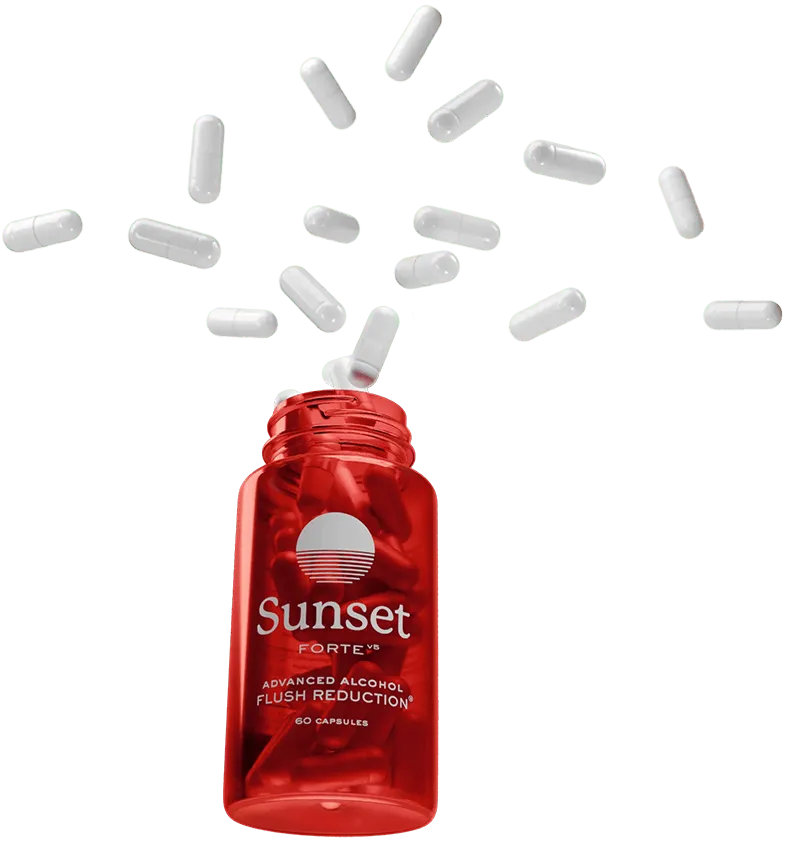
Sunset Alcohol Flush Support is designed to support your body's acetaldehyde clearance, which means less next-day neurochemical disruption and, for many users, noticeably milder hangxiety. Take it before you drink. Shop Sunset.
Quick summary: why hangxiety happens and how to feel better
Hangover anxiety isn't just "feeling guilty." It's four neurochemical mechanisms hitting at the same time:
- GABA rebound — alcohol suppresses your brain's calming system, and when it wears off, your brain is left in a hyperexcitable, anxious state
- Cortisol spike — your stress hormone system rebounds overnight, leaving you in fight-or-flight mode by morning
- Acetaldehyde disruption — this toxic metabolite crosses into your brain and interferes with dopamine and serotonin function
- Neurotransmitter depletion — dopamine and serotonin levels drop below baseline, creating the flat, dread-filled emotional quality unique to hangxiety
What helps:
- Time (12-24 hours for most people)
- Hydration with electrolytes
- A substantial meal with protein and B vitamins
- Light movement
- Sleep
- Reducing acetaldehyde buildup (before and during drinking)
- Grounding techniques for acute symptoms
What doesn't help:
- Hair of the dog (restarts the cycle)
- Ignoring it and hoping it goes away faster
- Beating yourself up about it (the shame spiral is a symptom, not a moral failing)
Want to go deeper? How Asian flush connects to anxiety and depression | Full guide to Asian flush and its symptoms
Enjoy your social life again — get Sunset Alcohol Flush Support for
33% off while stocks last!
What's inside?
Sunset Forte uses a carefully formulated blend of Glutathione, Dihydromyricetin, Cysteine, L-Theanine, & B Vitamins to support natural acetaldehyde processing and a clearer, less-flushed look.
Learn more
94% of people who try Sunset are satisfied.