Trouble Breathing After Drinking Alcohol: Causes & When to Worry

⏱️ TL:DR ∙ Article in 20s
Trouble breathing after drinking can be a medical emergency. If a drink brings on swelling of the lips, tongue or throat, real breathlessness or wheezing, hives, or a blue tinge to the lips, call emergency services now — it can be anaphylaxis. Short of that, alcohol can tighten your airways through the acetaldehyde–histamine pathway, especially if you have asthma. Never push through breathing trouble to keep drinking — and if it keeps happening, see a doctor.
Action items:
- First: when trouble breathing is an emergency
- Why alcohol can make it hard to breathe
- If you already have asthma
- When it's the flush reaction
- How to lower your risk
- When to see a doctor
Share this article
Copy and paste this link
Chest tightness or struggling to breathe after a drink is unsettling — and unlike most drinking side effects, this is one to take seriously rather than wait out.
Most of the time it's an uncomfortable but manageable reaction. Occasionally it's a sign of something dangerous. So before anything else, here's how to tell the difference.
First: when trouble breathing is an emergency
True difficulty breathing after alcohol can signal a severe allergic reaction — anaphylaxis. A genuine alcohol allergy is rare, but it's a medical emergency, and the Mayo Clinic is blunt about why it matters: "it can stop your breathing or your heartbeat."
Call emergency services immediately if drinking brings on swelling of the lips, tongue or throat, real shortness of breath or wheezing, widespread hives, faintness, or any blue tinge to the lips. Don't wait to see if it passes.
Why alcohol can make it hard to breathe
Set anaphylaxis aside and there's a second, more common mechanism: alcohol can directly tighten your airways. It's well documented, and it has little to do with tannins, despite the common claim.
The real driver is acetaldehyde, the toxic byproduct your body makes from alcohol. In people who clear it slowly — particularly those with ALDH2 deficiency, common across East Asian populations — acetaldehyde builds up and triggers mast cells to release histamine, which constricts the airways. That's the wheeze, the chest tightness, the breathlessness. Sulfites in wine and beer add to it for some people with asthma.
It's an immune problem only when it's a true allergy. The far more common version is this metabolic one — which is why it tracks with the flush reaction rather than with classic allergies.
If you already have asthma
This matters most if you're asthmatic — alcohol is a genuine, underrated trigger. In a study of 366 asthmatic adults led by researcher Hassan Vally, about a third reported that alcoholic drinks set off their asthma, with wine the most common culprit and reactions often starting within an hour.
If drinking reliably tightens your chest, treat it like any other asthma trigger: identify which drinks do it, keep your reliever inhaler on hand, and talk to your doctor about it rather than working around it. Alcohol can also worsen asthma and COPD generally, so it's worth a proper conversation.
When it's the flush reaction
If the breathlessness arrives alongside a red face, a racing heart and a stuffy nose, it's likely part of the alcohol flush reaction — the same acetaldehyde-and-histamine surge, showing up in your airways.
Here's the honest part: when alcohol is making it genuinely hard to breathe, that's your body flagging a real problem, not a comfort issue to optimise around. The only reliable fix is to drink less of it, or not at all — and to get the breathing symptoms checked rather than push through them.
How to lower your risk
If your reactions are mild and you've been cleared by a doctor, a few things genuinely reduce the odds of a flare:
- Find your trigger and avoid it. For most people it's wine (and often beer) more than clear spirits — track which drinks do it and steer around them.
- Don't drink what reliably makes you breathless. If a certain drink tightens your chest every time, that's a clear answer, not a challenge to beat.
- Keep it moderate, and never push through. Breathing trouble is a stop sign — masking it to keep drinking is the one thing not to do.
When to see a doctor
Any time breathing trouble keeps happening after you drink, get it assessed — even if each episode settles. A doctor can sort out whether it's asthma, a sulfite or histamine sensitivity, the flush reaction, or a true allergy, and each has a different plan.
The Cleveland Clinic puts the hard line simply: gasping for air, or a blue tinge to your lips or fingertips, is a medical emergency — get help straight away.
The bottom line
Trouble breathing after drinking usually comes down to alcohol tightening your airways through the acetaldehyde-and-histamine pathway — more so if you have asthma or clear acetaldehyde slowly.
It's mostly manageable by knowing your trigger and avoiding it. But it's also the one drinking reaction you should never just push through: if breathing is genuinely hard, or it keeps happening, treat it as the warning sign it is and see a doctor.
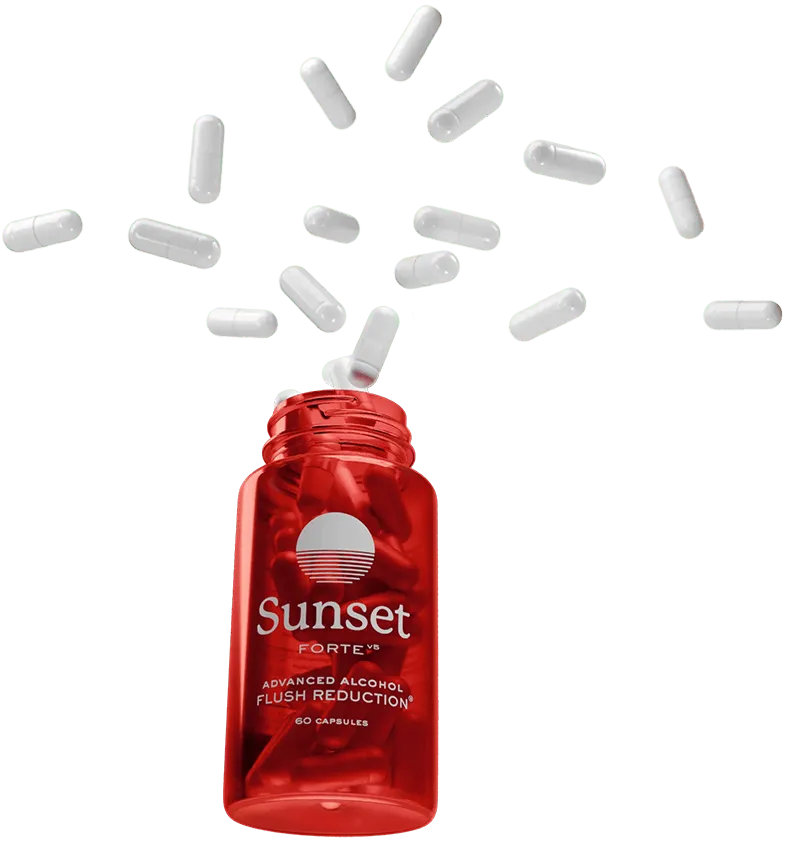
Enjoy your social life again — get Sunset Alcohol Flush Support for
33% off while stocks last!
What's inside?
Sunset Forte uses a carefully formulated blend of Glutathione, Dihydromyricetin, Cysteine, L-Theanine, & B Vitamins to support natural acetaldehyde processing and a clearer, less-flushed look.
Learn more
94% of people who try Sunset are satisfied.