Why Does My Heart Rate Increase When I Drink Alcohol?

⏱️ TL:DR ∙ Article in 20s
Alcohol speeds up your heart rate by triggering a nervous-system "fight or flight" surge, widening your blood vessels, and dehydrating you — more so if you have alcohol intolerance. A heavy session can tip the rhythm into atrial fibrillation ("holiday heart"), even in healthy people. It usually settles with rest, water and time, and the surest fix is drinking less. But chest pain, fainting, breathlessness, a beat that won't settle, or palpitations when you're sober mean you should see a doctor.
- Does alcohol raise your heart rate?
- Why is my heart racing after drinking?
- Why does wine seem to hit my heart harder?
- When should you worry?
- Alcohol and your heart, long-term
- How to steady a racing heart
Share this article
Copy and paste this link
A racing or skittering heartbeat after a few drinks can be unsettling. Most of the time it's a short-lived response to the alcohol that fades as it clears — but it isn't something to wave away, because alcohol genuinely can disturb your heart's rhythm.
The short version: understand why it happens, use the simple steps that help bring it down, and — importantly — know the signs that mean you should get it checked.
Does alcohol raise your heart rate?
Yes. Alcohol reliably nudges your heart rate up, and can lift blood pressure too. In a controlled study, heart rate climbed significantly as blood alcohol rose — driven by a shift in the nervous system toward more sympathetic ("fight or flight") activity and less of the calming, parasympathetic kind.
Drink heavily over years and the picture worsens: the rhythm can turn irregular even when you're sober, and the heart muscle itself can weaken. But for most people, an occasional post-drink racing heart is the short-term effect.
Why is my heart racing after drinking?
A few different things can be behind it.
Alcohol intolerance (Asian flush)
If you have alcohol intolerance or ALDH2 deficiency ("Asian flush"), an underpowered liver enzyme lets the toxic byproduct acetaldehyde build up — bringing on a fast heartbeat, facial flushing, restricted breathing, dizziness, nausea and headaches, often within minutes.
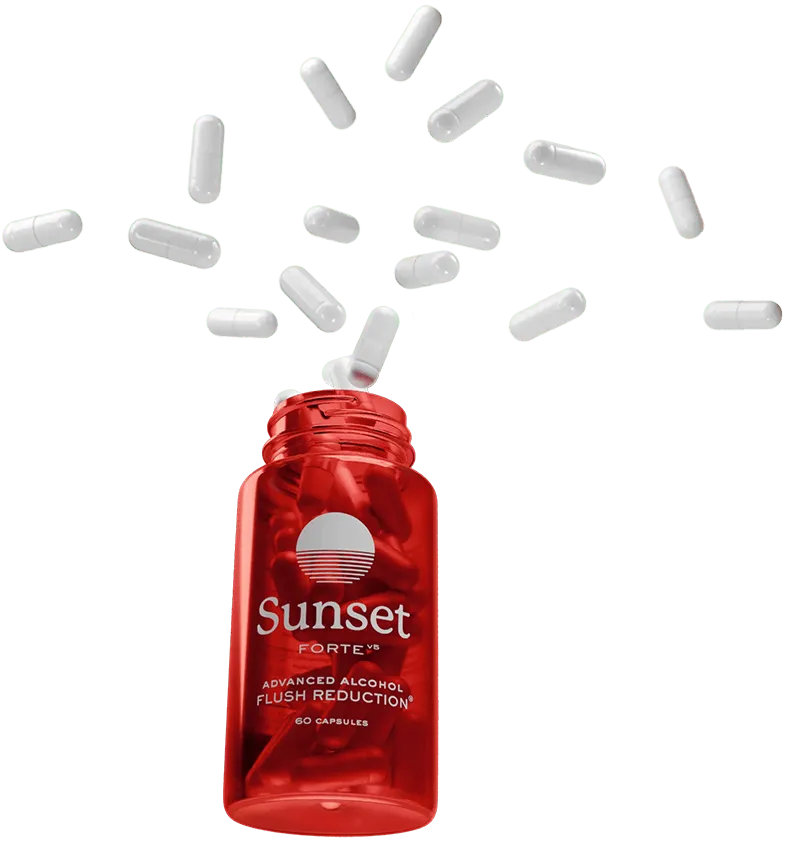
Sunset Forte is formulated to support your body's natural processing of acetaldehyde, the toxin that drives the flush. To be clear, it isn't a heart treatment and it won't make drinking safe for your heart — if alcohol sets your heart racing, the real fix is less alcohol.
A faster heartbeat is a normal reaction to alcohol
You don't need intolerance to feel it. Alcohol widens your blood vessels, so your heart works harder and faster to keep blood moving — which is also why you feel hot and look a little flushed when you drink. That's a normal response, not necessarily a sign of anything wrong.
Binge drinking and "holiday heart"
Drink a lot in one sitting and you can trigger what cardiologists call holiday heart syndrome — atrial fibrillation or other irregular rhythms after a binge, even in people with no heart disease. A 2024 review traces it to that same nervous-system imbalance, plus dehydration and electrolyte shifts. It's named for the heavy drinking that tends to come with holidays.
What counts as a binge? The NIAAA puts it at roughly four drinks (women) or five (men) in about two hours; heavy drinking is 8+ a week for women, 15+ for men.
Why does wine seem to hit my heart harder?
Some people react more to wine than to other drinks. Wine carries histamines and sulfites that can provoke flushing, headaches or a stuffy nose in sensitive people. Tannins get blamed too, though the evidence for them is thinner.
If one particular drink reliably sets your heart racing, that's worth noting — and worth raising with a doctor. A true alcohol allergy is rare but real, and can be serious. Otherwise, you may simply do better on a different drink.
When should you worry?
This is the part not to skip. Most alcohol-related rhythm changes settle on their own — clinical reviewers in StatPearls note that the large majority of alcohol-related atrial fibrillation resolves by itself — but a meaningful share recur, and some episodes need care. So know the difference.
So if you get chest pain, faint or nearly faint, can't catch your breath, feel a racing or irregular beat that won't settle, or notice palpitations when you haven't been drinking, treat it as a reason to seek medical help — promptly, and urgently for chest pain or fainting. The same goes if you already have a heart condition.
Alcohol and your heart, long-term
Beyond the night itself, regular heavy drinking takes a toll. It's a well-known contributor to high blood pressure, and over time can promote atrial fibrillation and even weaken the heart muscle, as a 2025 cardiology review describes. Atrial fibrillation, in turn, raises the risk of stroke.
There's no magic amount that erases the risk — even moderate, regular drinking nudges AF risk upward. (The relationship between ALDH2 deficiency and heart rhythm is genuinely complicated, but that's no reason to relax about alcohol.) Staying within sensible limits and avoiding binges makes a real difference.
How to steady a racing heart
If your heart's going after drinking and none of the warning signs above are present, these help bring it back down:
Stress, caffeine and poor sleep all amplify the effect, so easing those helps. As Houston Methodist cardiologist Dr. Chebrolu advises, "the best way to avoid holiday heart syndrome is to drink in moderation."
The bottom line
So yes — alcohol speeds up your heart, more so if you have intolerance, and a binge can tip it into a genuinely irregular rhythm. Usually it passes with rest, water and time. But a racing heart is your body flagging the alcohol, so the most reliable fix is to drink less — and if the warning signs appear, or it keeps happening, see a doctor. You only get one heart.
Enjoy your social life again — get Sunset Alcohol Flush Support for
33% off while stocks last!
What's inside?
Sunset Forte uses a carefully formulated blend of Glutathione, Dihydromyricetin, Cysteine, L-Theanine, & B Vitamins to support natural acetaldehyde processing and a clearer, less-flushed look.
Learn more
94% of people who try Sunset are satisfied.